

Risk Management · 2025
In this section3 topics
Risk Management Policy & Plan
Policy & Plan Description
The IMH Hospital Group places strong emphasis on enterprise-wide risk management to support sustainable business operations, enhance stakeholder confidence, and ensure alignment with the principles of good corporate governance. The Group focuses on the systematic identification, assessment, and management of risks that may affect operations, financial position, medical services, legal and regulatory compliance, as well as corporate reputation in an appropriate and effective manner.
The Company has established a Risk Management Working Group to formulate policies, frameworks, and oversee the implementation of the risk management system across the organization. This working group is responsible for reviewing risk mitigation plans of various units, monitoring performance, and regularly reporting to the Audit Committee and the Board of Directors.
Risk Management Process of the IMH Hospital Group
The IMH Hospital Group implements enterprise-wide risk management in a systematic and continuous manner through the following five key processes:
1. Risk Identification
Each unit reviews its operational activities, medical processes, support systems, and external factors in order to identify events or circumstances that may affect the achievement of the Group’s objectives. These risks cover medical services, operations, finance, legal matters, information technology, and corporate reputation.
2. Risk Assessment
Units assess risk levels by considering both the likelihood of occurrence and the potential impact, and prioritize risks accordingly to ensure that resources and control measures are focused on issues of material significance to the organization.
3. Risk Response / Mitigation
Appropriate risk management measures are determined for each issue, such as improving work processes, strengthening internal controls, establishing contingency plans, transferring certain risks, or accepting risks within levels deemed tolerable by the Company, subject to approval in accordance with the prescribed authority framework.
4. Monitoring and Reporting
Risk status and the effectiveness of mitigation measures are regularly monitored, with reports submitted to the Risk Management Working Group and subsequently to the Board of Directors and relevant committees, enabling timely oversight and decision-making.
5. Review and Continuous Improvement
The Company reviews the effectiveness of its risk management system annually, or whenever significant changes occur in business operations, in order to enhance processes, control measures, and practices in line with the evolving business environment and applicable regulations.
Risk Management System of the IMH Hospital Group
The IMH Hospital Group has established an enterprise-wide risk management system (Enterprise Risk Management: ERM) to support the achievement of strategic objectives, patient safety, business continuity, regulatory compliance, and the creation of sustainable shareholder value. The Group adopts the COSO ERM framework as a reference in defining its governance structure, processes, and monitoring mechanisms.
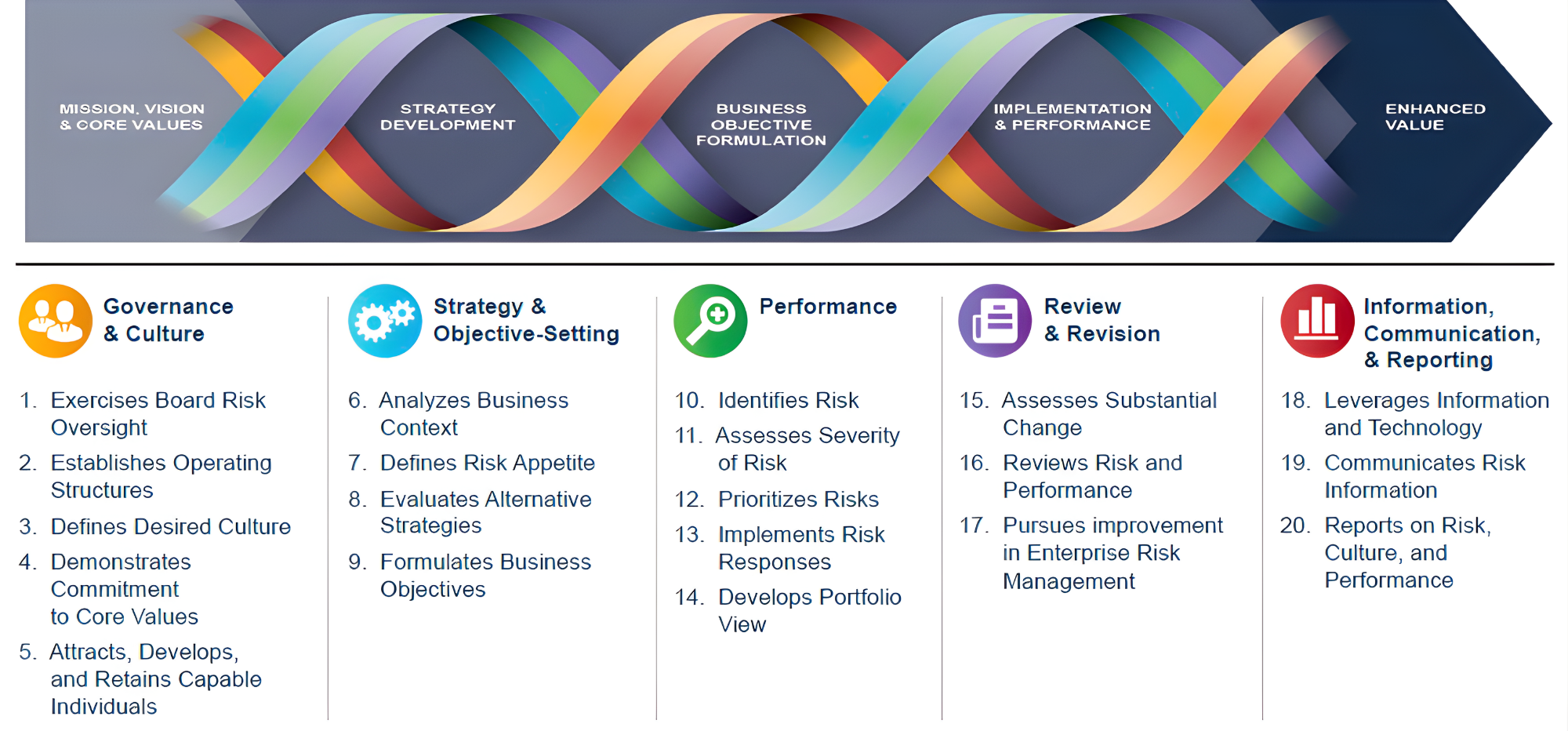
1. Governance and Culture (Principles 1–5)
The Company has established a clear risk governance structure, whereby the Board of Directors, the Audit Committee, and the Risk Management Committee are responsible for setting policies, providing oversight, and monitoring enterprise-wide risk management (Principles 1–2). Senior management and hospital executives are designated as risk owners within their respective areas of responsibility.
The Company has issued policies, manuals, and guidelines on risk management, together with communication and awareness programs for employees at all levels, in order to foster a strong risk management culture and ethical business conduct (Principles 3–4). In addition, the Company enhances the capabilities of its personnel in medical services, internal controls, and data governance to support the core missions of its hospitals (Principle 5).
2. Strategy and Objective Setting (Principles 6–9)
The Company integrates risk management into its business planning and strategic processes by considering competitive conditions, government policies, healthcare regulations, technological developments, and industry trends (Principle 6).
The Company defines its risk appetite for key areas such as patient safety, legal and regulatory compliance, personal data protection, and financial stability (Principle 7), and applies this in evaluating strategic alternatives and setting annual objectives for each business unit (Principles 8–9).
3. Performance (Principles 10–14)
The Company ensures that risks are identified and assessed across all Group entities, covering clinical activities, support operations, information systems, finance, and regulatory compliance (Principle 10).
Risks are evaluated based on likelihood and impact, prioritized, and addressed through appropriate mitigation measures, including improvements in clinical processes, internal controls, insurance coverage, emergency response plans, and enhancements to information technology security (Principles 11–13). A consolidated Group-level risk profile (ERM Portfolio) is prepared and presented to management and the Board of Directors to support oversight and decision-making (Principle 14).
In 2025, the IMH Hospital Group’s ERM Portfolio was categorized into five risk groups as follows:
1. Emerging Risks (e.g., changes in public health regulations, medical AI technologies, and cybersecurity threats)
Risk Management Approaches:
Systematic monitoring of laws, government policies, and healthcare industry trends, together with periodic assessments of their potential operational impact.
Establishment of dedicated task forces for digital technology and medical AI to evaluate suitability, cost-effectiveness, and associated risks prior to implementation.
Strengthening cybersecurity measures, including access controls, data backups, and regular system testing.
Provision of employee training on data security and cyber threat awareness.
Development and maintenance of IT emergency and data breach incident response plans.
2. Business Risks (e.g., competition, personnel costs, and revenue from healthcare entitlement schemes)
Risk Management Approaches:
Regular analysis of cost structures and margins of each service unit, together with financial projections under multiple scenarios.
Monitoring competition and market trends within service areas to adjust service and marketing strategies.
Diversification of revenue streams through specialized medical services, health check-up programs, and corporate clients.
Control of personnel costs through workforce planning, cross-functional skill development, and the use of supporting technologies.
Periodic review of contracts and key terms with major business partners.
3. Clinical Risks (e.g., patient safety, infections, and treatment errors)
Risk Management Approaches:
Establishment of clinical protocols and standards of care consistent with professional guidelines.
Implementation of infection control systems and hospital-wide risk surveillance.
Promotion of a patient safety culture and adverse event reporting.
Conduct of case reviews (Case Review / Morbidity & Mortality Conferences) to prevent recurrence.
Continuous training for medical personnel on clinical safety and emergency management.
4. ESG Risks (e.g., energy management, infectious waste disposal, and occupational safety)
Risk Management Approaches:
Implementation of energy-saving measures and resource-efficiency programs across hospital facilities.
Control of infectious waste and medical waste management in compliance with laws and regulatory requirements.
Workplace safety assessments and accident prevention planning.
Promotion of employee health and well-being programs.
Regular reporting on ESG performance and environmental regulatory compliance.
5. Shareholder Risks (e.g., corporate governance, corporate reputation, and disclosure practices)
Risk Management Approaches:
Strengthening corporate governance systems and adherence to ethical standards.
Ensuring accurate, complete, and timely disclosure to shareholders and investors.
Oversight of corporate communications and reputation management during crisis situations.
Periodic review of internal control systems and regulatory compliance.
Enhancement of grievance mechanisms and whistleblowing channels.
4. Review and Revision (Principles 15–17)
The Company periodically reviews all five risk categories, with risk owners reporting to the risk management function and relevant committees in order to assess the impact of material changes, such as government policies, clinical incidents, or technology-related risks (Principle 15).
The effectiveness of control measures and performance outcomes is evaluated, and internal audit findings are incorporated to continuously enhance the risk management system (Principles 16–17).
5. Information, Communication, and Reporting (Principles 18–20)
The Company collects risk-related information through internal information systems and reports to management and the Board of Directors in accordance with established reporting cycles (Principle 18). Risk management practices are communicated to employees at all levels through training programs, manuals, and internal communication channels (Principle 19).
The Company prepares Group-level reports on risk exposure, organizational culture, and risk management performance to support corporate governance and disclosures to shareholders and other stakeholders (Principle 20).
Risks to the Company's Business Operations
Risk Register
| Risk Name | Risk Characteristics | Consequences | Management Measures | Related Risk Factors |
|---|---|---|---|---|
| Emerging Risk – Intensifying Competition in the Hospital Industry | The hospital and healthcare business is facing increasingly intense competition from existing operators expanding their networks, new market entrants, and specialized clinics offering a wide range of healthcare services. This has led to heightened competition in pricing, service quality, medical technology, and the recruitment and retention of medical professionals. In addition, evolving patient behavior, with greater choice and higher expectations for standards of care, may further intensify competitive pressures on the IMH Hospital Group’s ability to maintain its market position. | If competition intensifies, the IMH Hospital Group may face pressure on service pricing and higher operating costs, particularly in personnel expenses and investments in medical technology, which could adversely affect profit margins and overall operating performance. In addition, increased competition may slow the expansion of the patient base and result in a loss of market share in certain areas. | The IMH Hospital Group focuses on the continuous enhancement of treatment quality and service standards, alongside prudent cost management and careful analysis of competitive conditions in each area prior to business expansion. The Group develops specialized medical services and health packages aligned with patient needs, strengthens brand image and confidence through appropriate communications, and retains and develops medical personnel in order to enhance long-term competitiveness. | 756 · Description: Change in laws and regulations · Info category: COMPLIANCE_RISK · 729 · Description: Behavior or needs of customers / consumers · Info category: STRATEGIC_RISK · 730 · Description: Government policy · Info category: STRATEGIC_RISK · 759 · Description: Corporate Governance · Info category: COMPLIANCE_RISK · 1725 · Description: Income volatility · Info category: FINANCIAL_RISK · 1714 · Description: Competition risk · Info category: STRATEGIC_RISK · 1715 · Description: Economic risk · Info category: STRATEGIC_RISK |
| Business Risk – Risk of Outstanding Receivables from Government Agencies | The IMH Hospital Group provides medical services to patients under various government programs and entitlement schemes, for which a portion of the revenue is received after submission of documentation and completion of verification processes in accordance with prescribed criteria. However, reimbursement procedures may take longer than anticipated, or there may be changes to eligibility requirements, document verification methods, or government policies. Such circumstances could result in higher-than-normal outstanding receivables or delays in cash collections. | Delays in payment could adversely affect the IMH Hospital Group’s cash flow and liquidity, requiring more stringent working capital management and potentially increasing financing costs during certain periods. In addition, any reduction in reimbursement rates or claims that fail to pass verification may negatively impact the Group’s revenue and overall operating performance. | The IMH Hospital Group closely monitors and manages receivables from government agencies through clearly defined internal controls and billing verification processes in order to minimize the risk of errors in reimbursement claims, and maintains ongoing coordination with relevant authorities. In addition, the Company regularly assesses the aging of receivables, prepares monitoring reports for management, and plans liquidity and working capital management appropriately in order to mitigate potential impacts on overall business operations. | 730 · Description: Government policy · Info category: STRATEGIC_RISK · 1724 · Description: Liquidity risk · Info category: FINANCIAL_RISK · 767 · Other name: Risks Related to Operating Costs · Description: Other · Info category: FINANCIAL_RISK · 755 · Other name: Risks Related to Medical Personnel · Description: Other · Info category: OPERATIONAL_RISK |
| Sustainability (ESG) Risk – Energy Management, Infectious Waste Management, and Occupational Health and Safety | This risk arises from operations that may impact the environment, society, and employee safety. It encompasses energy consumption within hospital facilities, the management of infectious waste and medical waste in compliance with applicable laws and regulations, and occupational health and safety practices for personnel. If not properly managed, such risks may lead to regulatory non-compliance, increased likelihood of workplace accidents, higher operating costs, and potential adverse impacts on the Company’s reputation and stakeholder confidence. | If not properly managed, such risks may result in regulatory non-compliance, workplace accidents, and increased operating costs due to inefficient energy usage and waste management. Additionally, they may adversely affect the Company’s reputation and stakeholder confidence, and ultimately impact the organization’s long-term sustainability. |
| 758 · Description: Violations of laws and regulations · Info category: COMPLIANCE_RISK |
| Operational Risk in Medical Services – Medical Personnel Risk | The hospital business relies heavily on medical personnel with specialized expertise and professional licenses. Currently, competition within the healthcare sector for the recruitment and retention of such personnel has intensified, driven by large private hospital groups, the expansion of specialized clinics, and changes in workforce structures within the public healthcare system. As a result, the IMH Hospital Group may face risks of shortages in certain medical specialties or higher-than-expected staff turnover during certain periods. | Failure to retain or recruit sufficient medical personnel could disrupt the continuity of medical services, increase patient waiting times, and affect the quality of care in certain specialties. In addition, heightened competition for compensation may lead to higher personnel costs, which could adversely impact profit margins and the overall operating performance of the IMH Hospital Group. | The IMH Hospital Group implements human resource policies aimed at retaining and continuously developing its personnel through appropriate compensation and benefits structures, skills development and career progression programs, and the creation of a supportive working environment. In addition, the Group conducts workforce planning in each unit in line with patient volumes and regularly monitors labor market conditions in the healthcare sector in order to support future business expansion. | 759 · Description: Corporate Governance · Info category: COMPLIANCE_RISK · 732 · Description: Changes in technologies · Info category: STRATEGIC_RISK · 1724 · Description: Liquidity risk · Info category: FINANCIAL_RISK · 767 · Other name: Cost-Related Risks · Description: Other · Info category: FINANCIAL_RISK |
| Operational Risk in Medical Services – Information Technology and Data Risk | The IMH Hospital Group utilizes information technology systems to manage patient data, deliver medical services, and support internal operations, including electronic medical records, billing systems, and interfaces with government agencies. However, the Group may face data security risks arising from cyberattacks, unauthorized access, or human error. In addition, information systems may experience disruptions or outages due to technical failures, force majeure events, or system maintenance. There is also a risk of non-compliance with personal data protection laws and other relevant regulations. | Data security incidents or system disruptions could adversely affect patient services, customer confidence, and the IMH Hospital Group’s reputation, and may also result in financial losses arising from regulatory penalties, remediation costs, or legal proceedings. If information systems are unable to operate normally, operational efficiency and business continuity could be adversely impacted. | The IMH Hospital Group has implemented appropriate information technology security measures, including access controls, regular data backups, system testing, and IT emergency response plans, as well as continuous monitoring of cyber threats. In addition, the Group promotes employee awareness of personal data protection and regularly monitors compliance with applicable laws and relevant guidelines in order to mitigate potential risks and impacts. | 759 · Description: Corporate Governance · Info category: COMPLIANCE_RISK · 1724 · Description: Liquidity risk · Info category: FINANCIAL_RISK |
Risks to Securities Holders' Investment
Risk Register
| Risk Name | Risk Characteristics | Consequences | Management Measures | Related Risk Factors |
|---|---|---|---|---|
| Shareholder Risk – Risks from Capital Market Conditions and Investor Confidence | Investments in the Company’s securities may be affected by various external and internal factors, including economic and capital market conditions, volatility in the healthcare industry, changes in laws and government policies relating to the hospital business, as well as the IMH Hospital Group’s operating performance and future expansion plans. Such factors may influence investor expectations and movements in the Company’s securities prices. | Changes in the foregoing factors could cause volatility in the Company’s securities prices and adversely affect investment returns for security holders. In addition, if operating results fall short of expectations or new investment projects are delayed, this could undermine investor confidence and the IMH Hospital Group’s ability to raise funds in the future. | The Company places strong emphasis on providing accurate, complete, and timely disclosures to shareholders and investors, while continuously monitoring economic conditions and industry trends. It has established corporate governance and enterprise risk management processes, together with appropriate investor communication channels, to enhance understanding of the Group’s business direction and operating performance and to strengthen long-term confidence. | 769 · Other name: Risks Related to Capital Market Conditions and Investor Confidence · Description: Other · Info category: HOLDER_RISK |