

Sustainability · 2025
In this section51 topics
- Sustainability Policy2 items
- Sustainability Goals & UN SDGs3 items
- Policy Review3 items
- Business Value Chain1 item
- Stakeholder Analysis1 item
- Environmental Policy & Guidelines3 items
- Environmental Policy Review3 items
- Energy — Plan & Guidelines2 items
- Energy — Electricity Consumption1 item
- Energy — Fuel Consumption1 item
- Energy — Targets2 items
- Energy — Performance & Outcomes2 items
- Water — Plan & Guidelines2 items
- Water — Withdrawal, Discharge & Consumption1 item
- Water — Targets2 items
- Water — Performance & Outcomes2 items
- Waste — Plan & Guidelines2 items
- Waste — Generation, Disposal & Recycling1 item
- Waste — Targets2 items
- Waste — Performance & Outcomes2 items
- GHG — Plan & Guidelines2 items
- GHG — Emissions1 item
- GHG — Emissions Verification1 item
- GHG — Principles & Standards1 item
- GHG — Targets1 item
- GHG Targets — Net Zero1 item
- GHG — Performance & Outcomes2 items
- Environmental Legal Incidents1 item
- Other Environmental Management1 item
- Social Policy & Guidelines3 items
- Social Policy Review3 items
- Social — Principles & Standards Practised1 item
- Human Rights Due Diligence2 items
- Employees — Plan & Guidelines3 items
- Employees — Workforce1 item
- Employees — Remuneration & Provident Fund1 item
- Employees — Training & Development1 item
- Employees — Occupational Health & Safety1 item
- Employees — Labour Relations1 item
- Employees — Employee Representation2 items
- Employees — Targets2 items
- Employees — Performance & Outcomes2 items
- Customers — Plan & Guidelines3 items
- Customers — Satisfaction Results1 item
- Customers — Targets2 items
- Customers — Performance & Outcomes2 items
- Community & Social — Plan & Guidelines3 items
- Community & Social — Targets2 items
- Community & Social — Performance & Outcomes2 items
- Other Social Management1 item
- Law Violation Incidents1 item
Sustainability Policy
Has a Sustainability Policy
Yes
Policy Description
The IMH Hospital Group places strong emphasis on conducting its business in accordance with the principles of sustainable development, striving to balance business growth with social responsibility and environmental stewardship, while adhering to good corporate governance, transparency, and compliance with applicable laws and regulations. These principles are intended to strengthen the Group’s long-term resilience and build confidence among all stakeholders.
Economic Dimension
The IMH Hospital Group is committed to operating with integrity and ethical business practices, emphasizing the maintenance of medical service quality in accordance with professional and relevant standards, as well as the prudent management of resources and costs to enhance operational efficiency and support the Group’s long-term competitiveness.
Social Dimension
The IMH Hospital Group prioritizes the provision of medical services in a fair and appropriate manner, respects human rights, equality, and non-discriminatory practices, and promotes the continuous development of its personnel through training programs and appropriate welfare schemes. The Group also engages in community and social activities in line with the capabilities of each operating unit.
Environmental Dimension
The IMH Hospital Group seeks to control and reduce the environmental impact of its operations through efficient energy and resource utilization, proper management of waste and infectious materials in compliance with applicable laws and standards, and the promotion of environmental awareness among employees. The Group also regularly reviews and enhances its environmental management practices to improve overall organizational performance.
Sustainability Goals & UN SDGs
Has Sustainability Goals
Yes
Goals Description
The IMH Hospital Group has established sustainability management goals aligned with its business strategy in both the short and long term, with a focus on strengthening financial stability, enhancing the quality of medical services, and managing resources responsibly in order to support long-term growth and create value for all stakeholders.
Short-Term Objectives
In the short term, the Group focuses on improving operational efficiency across its hospitals, exercising prudent cost control, and maintaining patient safety and quality standards in compliance with applicable requirements. These efforts are complemented by continuous personnel development through training programs, appropriate employee welfare, and the monitoring of environmental impacts related to energy and water consumption and waste management, to ensure stable operations in line with legal and regulatory standards.
Long-Term Objectives
Over the long term, the IMH Hospital Group aims to strengthen its business structure and competitive capabilities through the development of medical services and health check-up programs that respond to evolving societal needs, the adoption of technology to enhance treatment quality and efficiency, the cultivation of an organizational culture rooted in integrity, ethics, and transparency, and the continuous reduction of environmental impacts. These initiatives are intended to support stable and sustainable growth over the long term.
UN Sustainable Development Goals
| SDG Goal |
|---|
| Goal 3 Good Health and Well-being |
| Goal 5 Gender Equality |
| Goal 6 Clean Water and Sanitation |
| Goal 8 Decent Work and Economic Growth |
| Goal 9 Industry, Innovation and Infrastructure |
| Goal 10 Reduce Inequalities |
| Goal 12 Responsible Consumption and Production |
| Goal 13 Climate Action |
| Goal 15 Life on Land |
| Goal 16 Peace, Justice and Strong Institutions |
| Goal 17 Partnerships for the Goals |
Policy Review
Policy Reviewed This Year
Yes
Policy Changed This Year
Yes
Review Details
The IMH Hospital Group continuously reviews and enhances its sustainability materiality reporting to align with the evolving business context, international standards, and changing stakeholder expectations. The Company is committed to improving the quality of its disclosures to ensure completeness, transparency, and comparability of performance.
Such improvements encompass the definition of reporting boundaries, the identification and prioritization of material topics, and alignment with relevant reporting frameworks, including the GRI Standards 2021 and the United Nations Sustainable Development Goals (SDGs). This approach aims to elevate disclosure practices in accordance with internationally recognized good corporate governance principles.
In 2025, the Company maintained 12 material topics, which are aligned with its business operations and stakeholder impacts, as presented in the Materiality Identification and Impact Boundary Table.
Furthermore, the Company regularly reviews and refines its material topics to ensure alignment with changes in the business environment, regulatory requirements, and stakeholder expectations. This serves as a key mechanism in driving long-term value creation and sustainable growth across all dimensions.
Business Value Chain
Value Chain Description
The IMH Hospital Group has established its business value chain to comprehensively cover the entire medical service process, from upstream to downstream, ensuring that patients receive high-quality and safe care in accordance with professional standards.
The Company places importance on both core medical service activities and supporting functions that enhance operational efficiency, such as human resource management, procurement, infrastructure, and technology. These elements collectively contribute to improving service quality and strengthening the Company’s competitiveness on an ongoing basis.
In this regard, the Company has identified both direct and indirect stakeholders and manages relationships appropriately, taking into account the expectations of each stakeholder group. This approach aims to create balanced value and support the organization’s sustainable growth.
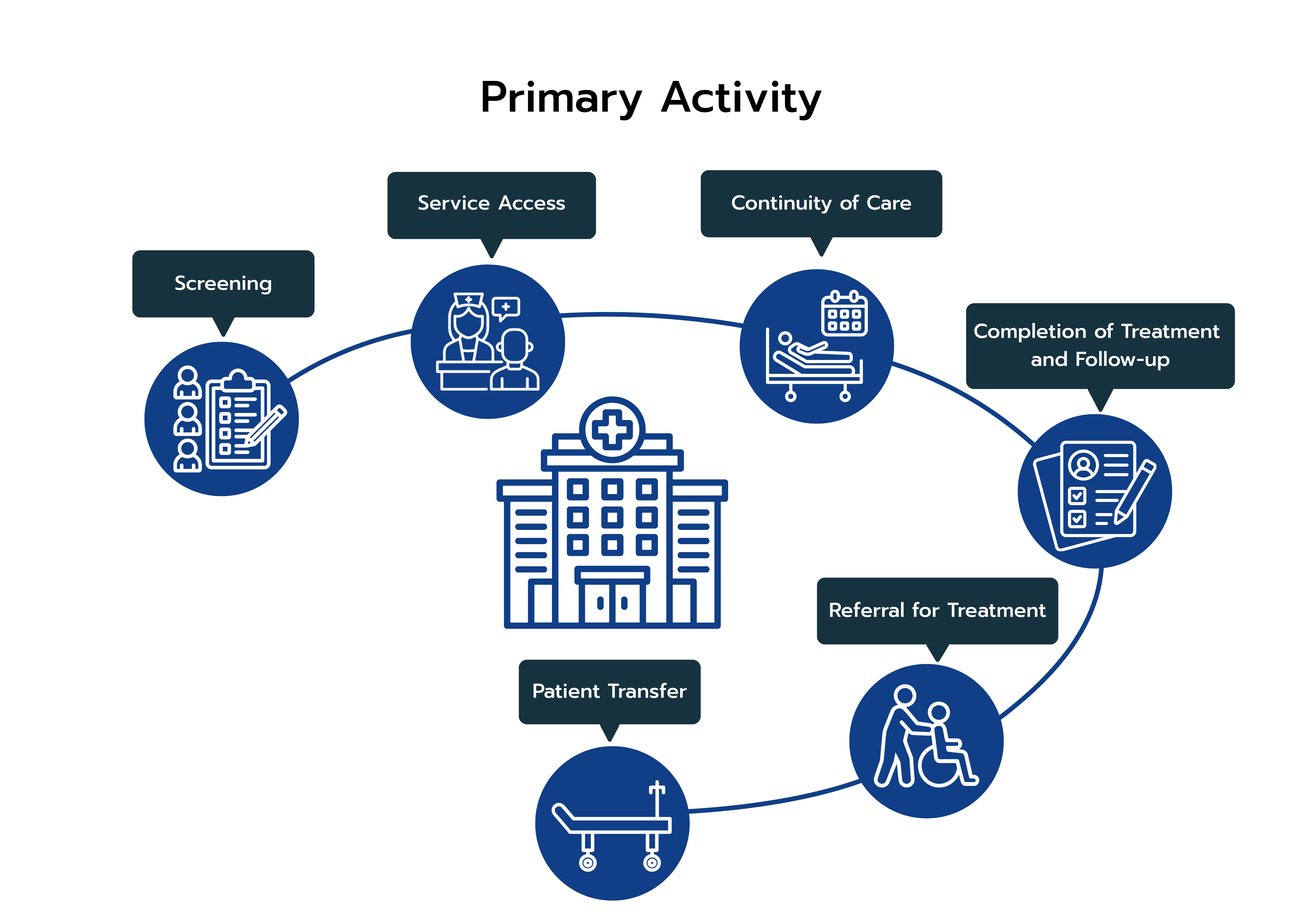
1. Screening
Conduct initial assessment of patients’ symptoms and prioritize the level of urgency to ensure timely and appropriate medical care.
2. Service Admission
Provide registration, medical history taking, and diagnostic evaluation by medical personnel to determine appropriate treatment plans tailored to each patient.
3. Continuous Care
Deliver treatment, care, and close monitoring in accordance with the prescribed treatment plan to ensure effective and safe medical outcomes.
4. Discharge and Follow-up
Summarize treatment outcomes, provide self-care guidance, and conduct post-treatment follow-up to prevent recurrence and promote long-term health.
5. Referral Services
Coordinate patient referrals to other healthcare facilities or specialized practitioners when necessary, ensuring continuity and appropriateness of care.
6. Patient Transfer
Ensure safe patient transfer within and between healthcare facilities in accordance with care standards and risk management protocols.
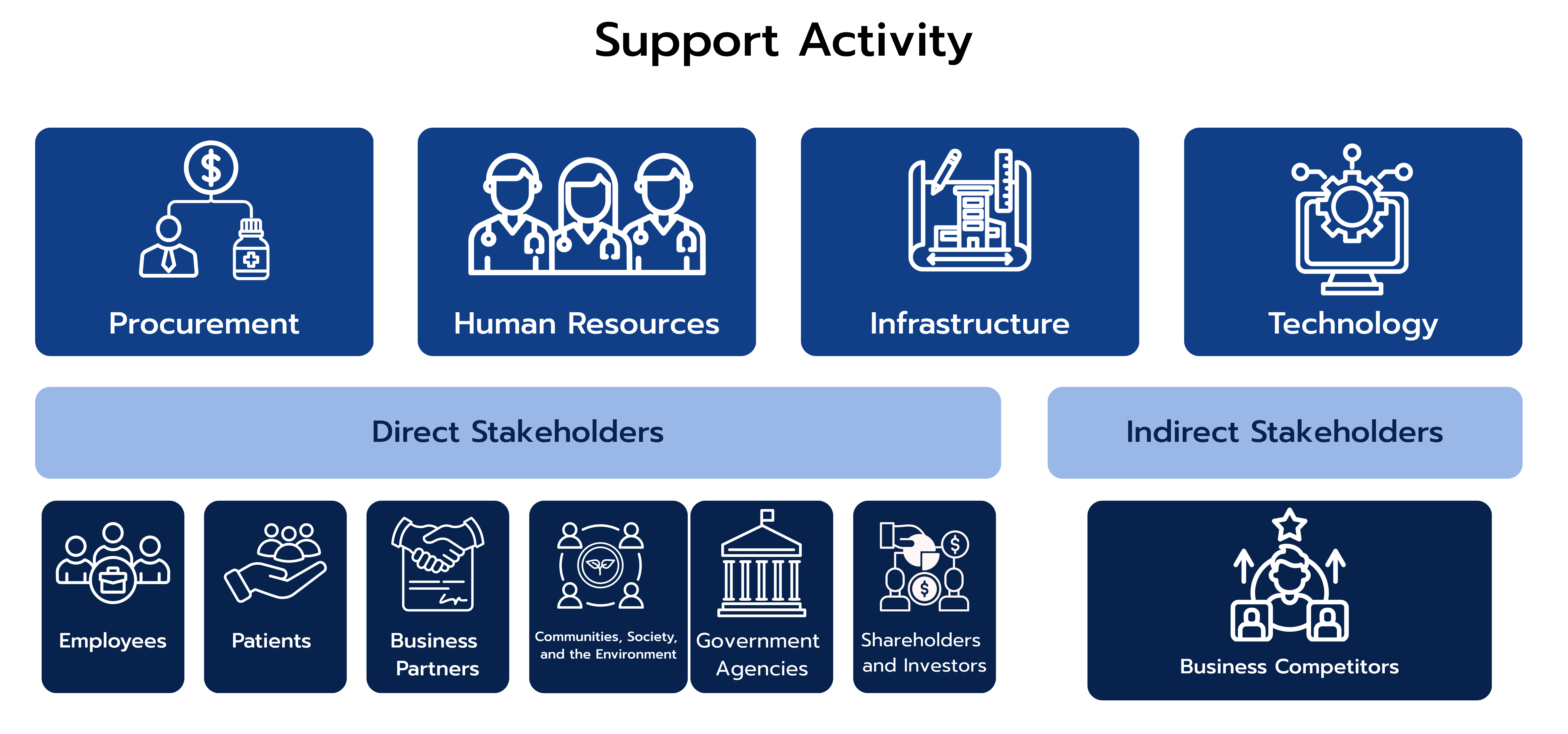
1. Procurement
Ensure the procurement of medical supplies and services with quality, transparency, and cost-effectiveness.
2. Human Resources
Develop and manage personnel to ensure high capability and readiness in service delivery.
3. Infrastructure
Maintain facilities and support systems to ensure operational efficiency and readiness.
4. Technology
Leverage technology to enhance service efficiency and quality.
Stakeholder Analysis
Stakeholder Analysis
| Stakeholder Type | Stakeholders | Stakeholder Expectations | Response to Expectations | Communication Activities |
|---|---|---|---|---|
| External stakeholders | 2904 · Description: Investors or investment institutions · 2913 · Description: Shareholders | 1. Operating performance, growth, business stability, and profitability.
2. Good corporate governance, transparent management, and auditability.
3. Appropriate dividend payments.
4. Regular disclosure of material information by the Company.
5. Risk management readiness to adapt to change and drive sustainable growth in the future. | 1. To enhance capabilities and continuously expand business lines in order to maximize shareholder returns and deliver long-term investment value.
2. To conduct business in accordance with the principles of good corporate governance, transparency, fairness, and adherence to business ethics.
3. To disclose operational information through the Annual Report (One Report) in both Thai and English versions.
4. To implement systematic, prudent, and comprehensive risk management in order to ensure sustainable growth across economic, social, and environmental dimensions. | 2939 · Description: Press Release · 2941 · Description: Online Communication · 2944 · Description: Annual General Meeting (AGM) |
| External stakeholders | 2898 · Description: Competitors | 1. To treat business competitors fairly.
2. Not to solicit or poach personnel from competitors. | 1. To comply with the Company’s Code of Conduct.
2. To attend meetings with management, provide information and recommendations, and cooperate in implementing meeting resolutions. | 2942 · Description: Internal Meeting |
| External stakeholders | 2899 · Description: Suppliers | 1. To comply with agreed commercial terms and conditions.
2. To ensure fairness and equality in business operations, with appropriate, transparent, and fair procurement processes, contracts, and memoranda of understanding.
3. To conduct business with transparency, integrity, and high ethical standards.
4. To respect human rights and treat employees fairly, while taking responsibility for society and the environment. | 1. To enter into sales and procurement contracts and treat all business partners in accordance with the Company’s procurement policies in an equitable and fair manner.
2. To comply with commercial terms and conditions and fulfill contractual obligations.
3. To make payments in accordance with agreed terms in a timely manner and within the prescribed period, and to maintain the confidentiality of business partners’ information. | 2941 · Description: Online Communication · 2945 · Description: Complaint Reception · 2949 · Other name: Quarterly selection and performance evaluation of business partners. · Description: Others |
| Internal stakeholders | 2921 · Description: Employees | 1. To provide appropriate and fair compensation and benefits, together with opportunities for career advancement.
2. To promote job security and career development.
3. To treat employees equally and fairly, in accordance with human rights principles.
4. To encourage continuous learning and the development of individual capabilities and potential.
5. To provide channels for employee participation and expression of opinions. | 1. To provide fair and appropriate compensation and benefits that meet employee expectations.
2. To improve the working environment to ensure compliance with standards, safety, and suitability for effective operations.
3. To establish measures for the protection and safeguarding of whistleblowers. | 2940 · Description: Social Event · 2941 · Description: Online Communication · 2942 · Description: Internal Meeting · 2945 · Description: Complaint Reception · 2946 · Description: Employee Engagement Survey · 2948 · Description: Training / Seminar · 2949 · Other name: Performance evaluation. · Description: Others |
| External stakeholders | 2923 · Description: Customers | 1. To provide high-quality and convenient services, clear communication channels, transparent medical services, and fair and appropriate pricing.
2. To ensure that patients receive accurate and clear information.
3. To uphold ethical standards, demonstrate responsibility, and protect the confidentiality and privacy of patients. | 1. To provide high-quality medical services in compliance with applicable laws and regulations, and to treat all patients equally without discrimination.
2. To continuously develop and enhance service quality.
3. To listen to concerns and resolve issues promptly and effectively.
4. To offer modern services and advanced medical technologies in order to deliver comprehensive solutions to patients. | 2938 · Description: Visit · 2940 · Description: Social Event · 2941 · Description: Online Communication · 2945 · Description: Complaint Reception · 2947 · Description: Satisfaction Survey |
| External stakeholders | 2931 · Description: Government agencies and Regulators | 1. Compliance with applicable laws and regulations. | 1. To conduct business activities strictly in accordance with applicable laws and regulations. | 2938 · Description: Visit · 2943 · Description: External Meeting · 2945 · Description: Complaint Reception |
| External stakeholders | 2936 · Other name: Communities and the Environment · Description: Others | . To support community well-being and enhance quality of life for local populations. | 1. To support public benefit activities. | 2938 · Description: Visit · 2940 · Description: Social Event · 2945 · Description: Complaint Reception |
Environmental Policy & Guidelines
Has an Environmental Policy
Yes
Policy Description
IMH Hospital Group’s conducts its business based on environmental responsibility and aims to minimize both direct and indirect human impacts on the environment. This approach is intended to benefit employees at all levels within the organization and demonstrate the Company’s commitment to society, communities, and stakeholders. The following guidelines have been established:
1. Continuously cultivate environmental responsibility awareness among employees at all levels.
2. Operate the business in a way that minimizes negative impacts on society, the environment, and the quality of life of the general public.
3. Conduct business with a strong sense of responsibility toward the environment and society, placing importance on selecting or developing products, services, processes, and work approaches that promote efficient use of natural resources, environmental friendliness, energy conservation, and waste reduction. This is carried out under the 3Rs concept: Reduce, Reuse, and Recycle, to mitigate the environmental impact of the Group’s operations on stakeholders and society.
4. Communicate, train, and educate employees to understand and be aware of their roles and responsibilities in contributing to environmental management in alignment with the organization’s goals.
5. Communicate the Company’s environmental policy and practices to all stakeholders involved in the Group’s business operations, to promote awareness and ensure compliance with laws, standards, and the Company’s environmental guidelines.
These five policies reflect the IMH Hospital Group’s strong commitment to conducting its business alongside delivering high-quality medical services, while also striving to be a role model organization in long-term social and environmental responsibility.
Environmental Guidelines
| Guideline |
|---|
| Electricity Management |
| Fuel Management |
| Renewable/Clean Energy Management |
| Water Management |
| Waste Management |
| Biodiversity Management |
| Greenhouse Gas and Climate Change Management |
| Air Quality Management |
| Noise Pollution Management |
Environmental Policy Review
Policy Reviewed This Year
Yes
Review Details
Key Environmental Policy and Practice Changes of the IMH Hospital Group in 2025
In 2025, the IMH Hospital Group reviewed and strengthened its environmental management approach in a more systematic manner to support the operations of hospitals and affiliated service units across the Group. The focus was placed on establishing “minimum common practices at Group level” in parallel with “collecting baseline data to enable more robust quantitative target-setting in subsequent years.”
The key changes are summarized below.
1) Electricity and Energy Management
In 2025, the Group shifted from general energy-saving campaigns toward a more structured management approach by:
(1) establishing electricity-use control guidelines for high-consumption areas such as air-conditioning systems, lighting, and medical support equipment;
(2) enhancing monthly monitoring of electricity consumption at departmental/building levels to identify trends and abnormal usage; and
(3) promoting preventive maintenance of electrical equipment and air-conditioning systems to reduce energy losses caused by declining efficiency.
Change in targets: The focus moved from purely “cost reduction” to “consistent monitoring and control of electricity consumption with the ability to identify improvement opportunities,” while initiating the development of baseline data to support appropriate energy-reduction targets in subsequent years.
2) Fuel and Oil Management
In 2025, the Group strengthened controls over fuel use related to transportation, service operations, and backup generators by introducing more systematic recording of fuel refilling and consumption, periodic checks for abnormal usage, and reviews of storage tank and storage-area management to ensure safety, reduce leakage risks, and ensure proper handling of oil spills or contaminated materials in compliance with applicable requirements.
Change in targets: Greater emphasis was placed on “risk control and efficient use,” with initial data collection undertaken to analyze fuel-use trends and identify feasible reduction measures.
3) Renewable and Clean Energy Management
In 2025, the approach shifted toward assessing feasibility on a site-by-site basis rather than announcing large-scale projects. Initial actions included surveys of potential (such as rooftop areas, engineering constraints, and building-lease conditions) and integration of energy-efficiency considerations into procurement processes (e.g., selecting energy-saving equipment or certified high-efficiency products).
Change in targets: The focus evolved from general “promotion” to “feasibility assessment and gradual implementation,” to support appropriate and verifiable investment decisions.
4) Water Resource and Water Quality Management
In 2025, the Group expanded its approach from ensuring wastewater-system compliance to strengthening monitoring and prevention by introducing:
(1) regular testing of discharged water quality and treatment systems;
(2) preventive maintenance of wastewater-treatment systems and related equipment; and
(3) water-efficiency measures in service operations and facility management (such as leak detection and selective equipment upgrades).
Change in targets: The emphasis shifted from merely “meeting standards” to “consistently meeting standards and reducing system-failure risks,” while initiating water-use data collection to support feasible reduction targets in the following year.
5) Waste and Hazardous Waste Management
In 2025, the Group clarified and strengthened practices by emphasizing “source separation and verification of transportation and disposal,” covering general waste, recyclable waste, hazardous waste, and infectious waste through:
(1) increasing and refining waste-separation points and methods to align with actual operations;
(2) enhancing oversight of disposal documentation and contractor selection in accordance with regulatory requirements; and
(3) reinforcing communication and refresher training for relevant personnel to reduce cross-contamination between waste categories.
Change in targets: The focus expanded from “proper disposal” to include “reducing risks from incorrect segregation and improving data completeness for consolidated reporting.”
6) Biodiversity Management
In 2025, the Group tailored its approach to the context of urban healthcare facilities, emphasizing the mitigation of indirect environmental impacts and the preservation of green areas rather than undertaking large-scale conservation projects. Actions included:
(1) maintaining on-site green spaces and trees where appropriate;
(2) avoiding the use of high-risk chemicals in landscaping; and
(3) promoting environmentally friendly materials and products wherever feasible.
Change in targets: From previously lacking a clear framework, the Group introduced minimum practice guidelines to preserve green areas and reduce ecological impacts within operating sites.
7) Greenhouse Gas Emissions and Climate Change Management
In 2025, the Group began establishing a foundation for climate-related management by linking energy use and transportation/fuel consumption with the initial collection of verifiable activity data relevant to greenhouse-gas emissions (such as electricity, fuel, and waste). This supports the future development of organizational carbon-footprint assessments. The Group also considered climate-adaptation measures, such as backup-power readiness and business-continuity capabilities during extreme weather events.
Change in targets: The approach moved from “no quantitative targets defined” to “establishing baseline data and monitoring frameworks” to enable appropriate emissions-reduction targets in the future.
8) Air Quality Management
In 2025, the Group enhanced practical oversight of indoor air quality by focusing on:
(1) scheduled maintenance of air-conditioning systems and regular cleaning or replacement of filters;
(2) management of high-risk areas such as dust or odor accumulation points; and
(3) control of activities that could generate dust or nuisance odors in service areas.
Change in targets: The emphasis shifted from general cleanliness to “system-level management and preventive measures” to maintain appropriate air quality for patients, employees, and service users.
9) Noise Pollution Management
In 2025, the Group strengthened controls relating to quietness and suitability within healthcare environments by:
(1) establishing guidelines for construction and maintenance activities to be conducted during appropriate time periods;
(2) regulating equipment use and public-address announcements in service areas; and
(3) defining complaint-handling and corrective-action procedures for noise disturbances.
Change in targets: The approach evolved from reactive, case-by-case responses to the implementation of preventive and control measures to minimize impacts on patients and overall service experience.
Policies & Guidelines Changed
| Change |
|---|
| Electricity Management |
| Fuel Management |
| Renewable/Clean Energy Management |
| Water Management |
| Waste Management |
| Biodiversity Management |
| Greenhouse Gas and Climate Change Management |
| Air Quality Management |
| Noise Pollution Management |
Energy — Plan & Guidelines
Has an Energy Management Plan
Yes
Plan Description
Over the years, the IMH Hospital Group has continuously implemented energy-conservation measures on an annual basis, while strengthening awareness of efficient energy use among executives, employees, and building users within hospital facilities. These initiatives include encouraging the use of stairs instead of elevators for travel of one to two floors; campaigns to switch off water taps, lights, and air-conditioning systems when not in use; and setting air-conditioning temperatures at an appropriate level of approximately 25 degrees Celsius. In addition, the Company has progressively replaced conventional lighting with energy-efficient LED lamps throughout its hospitals and adjusted illumination levels to suit the functional requirements of each area.
Furthermore, the IMH Hospital Group has begun installing rooftop solar power generation systems at five parking-area locations within its hospitals to help reduce electricity expenses and lessen reliance solely on power supplied by external providers.
These initiatives reflect the IMH Hospital Group’s commitment to efficient and sustainable energy management. In addition to encouraging participation from personnel and service users in energy-saving practices, the Group has also invested in environmentally friendly technologies—such as LED lighting and solar power systems—to reduce dependence on external energy sources and to demonstrate its tangible responsibility toward the prudent use of natural resources.
Energy — Electricity Consumption
Electricity Consumption
| Metric | Current Year | Previous Year | Two Years Ago | Remark |
|---|---|---|---|---|
| Total electricity consumption within the organization (Kilowatt-Hours) | 2,681,256 | 2,876,427 | 2,352,596 | 2023-2025 Collect data from IMH Hospital Group |
| Electricity purchased for consumption from non-renewable energy sources (Kilowatt-Hours) | 2,681,256 | 2,876,427 | 2,352,596 | |
| Electricity purchased or generated for consumption from renewable energy sources (Kilowatt-Hours) |
Energy — Fuel Consumption
Fuel Consumption
| Metric | Current Year | Previous Year | Two Years Ago |
|---|---|---|---|
| Jet fuel (Litres) | |||
| Diesel (Litres) | 279,626.46 | 90,718.03 | 69,973.84 |
| Gasoline (Litres) | 1,956.59 | 4,662.31 | 4,737.67 |
| Fuel oil (Litres) | |||
| Crude oil (Barrels) | |||
| Natural gas (Standard cubic feet) | |||
| LPG (Kilograms) | |||
| Steam (Metric tonnes) | |||
| Coal (Metric tonnes) |
Energy — Targets
Has Set Targets
Yes
Targets
| Target | Base Year | Target Year | Target Change (%) | Unit |
|---|---|---|---|---|
| Reduction of electricity purchased for consumption | 2,023 | 2,028 | 10 | Kilowatt-hour |
| Reduction of fuel consumption | 2,023 | 2,028 | 10 | Litres |
| Increase of electricity consumption from renewable energy sources | 2,023 | 2,028 | 10 | Kilowatt-hour |
| Increase of fuel consumption from renewable energy sources | 2,023 | 2,028 | 10 | Litres |
Energy — Performance & Outcomes
Has Performance Results
Yes
Performance Description
When compared to the base year 2023, in which total electricity consumption was 2,352,596 kWh with electricity expenses of Baht 12,091,149.53, it was found that in 2025, electricity consumption increased to 2,681,256 kWh, representing an increase of 328,660 kWh or 13.97%, in line with the expansion of services and the growing number of patients.
However, the Company was able to effectively manage electricity expenses, reducing total costs to Baht 11,892,946.65, a decrease of Baht 198,202.88 or 1.64%.
This cost control reflects the Company’s efficiency in energy management, resulting from the continuous implementation of energy-saving measures, improvements in the efficiency of equipment and utility systems within hospital facilities, and the promotion of responsible energy consumption behavior among personnel. These efforts are aligned with the Company’s environmental management approach under the “IMH Green Care” initiative.
Water — Plan & Guidelines
Has a Water Management Plan
Yes
Plan Description
The IMH Hospital Group recognizes the importance of efficient and sustainable water use, as water is an essential resource for medical services and for various hospital operations, including cleaning, patient hygiene, and maintaining the indoor environment. Accordingly, the Group has established a practical and implementable water-management plan aimed at improving water-use efficiency, reducing losses, and encouraging participation among personnel at all levels. The key approaches are as follows.
1) Efficient Water Use
The IMH Hospital Group plans to install water-saving devices at frequently used points, such as sensor-operated faucets and low-flow showerheads, as well as adjust water pressure appropriately for different areas. These measures are intended to reduce overall water consumption without compromising service quality.
2) Plumbing-System Maintenance and Leak Prevention
The Group has established regular inspection schedules for water-supply pipelines and sanitary fixtures and will promptly repair any abnormalities identified. In addition, quarterly preventive-maintenance plans will be implemented to minimize the risk of unnecessary water losses.
3) Water Reuse
The IMH Hospital Group is evaluating the adoption of greywater treatment systems, whereby water from washbasins and showers in certain areas would be reused for irrigating green spaces or for cleaning parking areas. This approach is expected to reduce potable-water consumption over the long term.
4) Monitoring and Evaluation of Water-Use Efficiency
The IMH Hospital Group plans to install water meters by usage zone to enable more accurate analysis of water consumption in each area. Monthly and annual water-use reports will be prepared to support operational improvements and future planning.
Water — Withdrawal, Discharge & Consumption
Water Withdrawal, Discharge & Consumption
| Metric | Current Year | Previous Year | Two Years Ago | Remark |
|---|---|---|---|---|
| Total water withdrawal (Cubic meters) | 53,676 | 40,866 | 46,102 | 2023-2025 Collect data from IMH Hospital Group |
| Total water withdrawal by third-party water (Cubic meters) | 53,676 | 40,866 | 46,102 | |
| Total water withdrawal by surface water (Cubic meters) | ||||
| Total water withdrawal by groundwater (Cubic meters) | ||||
| Total water withdrawal by seawater (Cubic meters) | ||||
| Total water withdrawal by produced water (Cubic meters) | ||||
| Percentage of wastewater treated before discharge (%) | ||||
| Total water discharge (Cubic meters) | ||||
| Total water discharge to third-party water (Cubic meters) | ||||
| Total water discharge to surface water (Cubic meters) | ||||
| Total water discharge to groundwater (Cubic meters) | ||||
| Total water discharge to seawater (Cubic meters) | ||||
| Total water consumption (Cubic meters) | 53,676 | 40,866 | 46,102 | |
| Recycled water (Cubic meters) |
Water — Targets
Has Set Targets
Yes
Targets
| Target | Base Year | Base Year Value | Target Year | Target Change (%) | Unit |
|---|---|---|---|---|---|
| Reduction of water withdrawal | 2,023 | 46,102 | 2,028 | 10 | Cubic meters |
Water — Performance & Outcomes
Has Performance Results
Yes
Performance Description
In 2025, the IMH Hospital Group recorded total water consumption of 53,676 cubic meters, with water expenses amounting to Baht 938,611.59. Compared to 2024, water consumption increased by 12,810 cubic meters, representing a rise of 31.35%, while water expenses increased by Baht 55,267.03, or 6.26%. This increase was primarily driven by the expansion of healthcare services and the growing number of patients.
Waste — Plan & Guidelines
Has a Waste Management Plan
Yes
Plan Description
The IMH Hospital Group places strong emphasis on the proper management of waste and hazardous materials throughout all operational processes, as hospitals generate various types of waste, including general waste, infectious waste, hazardous waste, and recyclable waste. Without appropriate management systems, such waste could pose risks to the health of personnel, service recipients, and the surrounding environment. Accordingly, the Group has established comprehensive, systematic, and practical management guidelines to control risks and minimize environmental impacts. Key measures are outlined below:
1. Waste Segregation at Source
The IMH Hospital Group clearly designates waste disposal points in all areas by using color-coded bins in accordance with recognized standards, as follows:
Red bins for infectious waste
Yellow bins for hazardous waste, such as needles, syringes, and chemicals
Green bins for general waste
Blue bins for recyclable waste
In addition, the Group provides communication materials and training to employees on proper waste segregation. Instructional signage is installed at every disposal point to enhance understanding and reduce errors in waste disposal.
2. Safe Storage and Transportation
Infectious and hazardous waste is stored in sealed, secure containers and transported using dedicated carts to designated temporary storage areas in order to reduce the risk of contamination and disease transmission. Waste is removed from hospital premises on a daily basis and disposed of by legally licensed contractors in accordance with applicable regulations.
3. Waste Reduction and Recycling Promotion
The IMH Hospital Group encourages employees to reduce the use of single-use plastics, such as by using personal drinking containers or reusable food packaging. Recycling collection points are provided in multiple locations, and recyclable materials are consolidated and delivered to local authorities or certified recycling companies in line with circular economy principles.
4. Training and Awareness Building
The Group conducts regular training programs for employees on medical waste management, contamination prevention, and hazardous waste handling in order to enhance knowledge, awareness, and organization-wide participation.
5. Monitoring, Inspection, and Performance Evaluation
The IMH Hospital Group maintains monthly records of waste volumes categorized by type. These data are analyzed to identify trends and to support future waste reduction planning. In addition, regular inspections and evaluations of waste storage and disposal systems are conducted jointly with contracted service providers to ensure compliance with applicable laws and relevant standards.
Waste — Generation, Disposal & Recycling
Waste Generation, Disposal & Recycling
| Metric | Current Year | Previous Year | Two Years Ago | Remark |
|---|---|---|---|---|
| Total waste generated (Kilograms) | 128,414.84 | 106,408.7 | 53,776.68 | 2023-2025 Collect data from IMH Hospital Group |
| Non-hazardous waste (Kilograms) | ||||
| Non-hazardous waste - Landfilling (Kilograms) | ||||
| Non-hazardous waste - Incineration (with energy recovery) (Kilograms) | ||||
| Non-hazardous waste - Incineration (without energy recovery) (Kilograms) | ||||
| Non-hazardous waste - Other disposal operations (Kilograms) | ||||
| Hazardous waste (Kilograms) | 128,414.84 | 106,408.7 | 53,776.68 | |
| Hazardous waste - Landfilling (Kilograms) | ||||
| Hazardous waste - Incineration (with energy recovery) (Kilograms) | ||||
| Hazardous waste - Incineration (without energy recovery) (Kilograms) | ||||
| Hazardous waste - Other disposal operations (Kilograms) | ||||
| Total reused/recycled waste (Kilograms) | ||||
| Reused/Recycled non-hazardous waste (Kilograms) | ||||
| Reused non-hazardous waste (Kilograms) | ||||
| Recycled non-hazardous waste (Kilograms) | ||||
| Reused/Recycled hazardous waste (Kilograms) | ||||
| Reused hazardous waste (Kilograms) | ||||
| Recycled hazardous waste (Kilograms) |
Waste — Targets
Has Set Targets
Yes
Targets
| Waste Type | Disposal Approach | Target | Base Year | Base Year Value | Target Year | Target Change (%) | Unit |
|---|---|---|---|---|---|---|---|
| Non-hazardous waste | 2758 · Description: Reuse · 2759 · Description: Recycle | Increase waste utilization | 2,023 | 53,776.68 | 2,028 | 10 | Kilograms |
Waste — Performance & Outcomes
Has Performance Results
Yes
Performance Description
In 2025, the IMH Hospital Group generated a total of 128,414.84 kilograms of waste and hazardous waste, with waste management expenses amounting to Baht 896,851. Compared to 2024, total waste increased by 22,005.84 kilograms, representing an increase of 20.68%, while waste management expenses rose by Baht 253,571, or 39.41%. This increase is consistent with the expansion of medical services, as well as the implementation of more stringent safety standards in the management of infectious and hazardous waste.
GHG — Plan & Guidelines
Has a GHG Management Plan
Yes
Plan Description
IMH Hospital Group recognizes the impact of climate change and the crucial role that healthcare organizations play in reducing greenhouse gas (GHG) emissions from both direct and indirect activities—including energy consumption, waste management, procurement, and employee behaviors. In alignment with national environmental targets and the United Nations Sustainable Development Goals (SDGs), IMH has established a Greenhouse Gas Management Plan as follows:
1. Reducing Energy-Related Greenhouse Gas Emissions
The hospital has improved the energy efficiency of electrical systems by replacing fluorescent lights with LED bulbs and maintaining air conditioning at an optimal temperature of 25 degrees Celsius. These measures have contributed to a continued reduction in electricity consumption and associated emissions.
2. Promoting Clean Energy Use
Solar panels have been installed on the hospital’s parking lot rooftops to reduce reliance on fossil fuels. This initiative helps lower organizational carbon emissions, with plans to expand the system in the coming years. The hospital aims to increase its use of renewable energy to at least 15% of total energy consumption by 2030.
3. Reducing Emissions from Transportation and Commuting
To address indirect emissions (Scope 3), the hospital encourages the use of public transportation among staff, promotes carpooling, and supports virtual meetings in place of inter-branch travel. These actions help reduce fuel consumption and carbon dioxide emissions from commuting.
4. Improved Waste Management
Proper waste segregation practices have been implemented, particularly for hazardous and recyclable waste. By reducing landfill disposal—especially food waste in the hospital cafeteria—the hospital helps mitigate methane emissions from waste management systems.
5. Establishing GHG Monitoring and Reporting Systems
The hospital has begun collecting data on energy, fuel, water consumption, and waste management to calculate annual GHG emissions. This data will serve as the basis for setting long-term carbon reduction targets and implementing effective climate action strategies.
GHG — Emissions
GHG Emissions
| Metric | Previous Year | Two Years Ago |
|---|---|---|
| Total GHG emissions (Metric tonnes of carbon dioxide equivalent) | 0 | 0 |
| Total greenhouse gas emissions 1 (Metric tonnes of carbon dioxide equivalent) | ||
| Total greenhouse gas emissions 2 (Metric tonnes of carbon dioxide equivalent) | ||
| Total greenhouse gas emissions 3 (Metric tonnes of carbon dioxide equivalent) |
GHG — Emissions Verification
Emissions Verified by a Third Party
No
GHG — Principles & Standards
Principles & Standards Applied
| Standard |
|---|
| 2671 |
GHG — Targets
Has Set GHG Targets
Yes
GHG Targets — Net Zero
Net Zero Targets
| Emission Scope | Base Year | Base Year Emissions | Near-term Target Year | Near-term Target Change (%) | Long-term Target Year | Long-term Target Change (%) | Target Year | Target Change (%) | Unit |
|---|---|---|---|---|---|---|---|---|---|
| 2716 | 2,023 | 0 | 2,028 | 10 | 2,065 | 100 | 2,028 | 10 | Metric tonnes of carbon dioxide equivalent |
GHG — Performance & Outcomes
Has Performance Results
Yes
Performance Description
The IMH Hospital Group has implemented systematic measures to reduce greenhouse gas emissions, focusing on minimizing environmental impacts arising from its core operations. These initiatives cover energy consumption, transportation, procurement practices, and waste management, in support of the organization’s sustainable development objectives. Key performance highlights are summarized below:
1. Reduction of Electricity Consumption in Buildings
The hospitals have replaced conventional lighting with LED fixtures in nearly all major service areas and adjusted air-conditioning temperature settings to approximately 25 degrees Celsius. These actions have contributed to lower electricity consumption and reduced indirect greenhouse gas emissions from purchased electricity (Scope 2).
2. Use of Renewable Energy from Solar Panels
Solar panels have been installed at five parking areas to partially substitute electricity generated from fossil fuels within the organization’s systems. This has resulted in a reduction in carbon dioxide emissions, and the Group plans to consider expanding the installation areas in the following year.
3. Reduction of Emissions from Travel and Meetings
The IMH Hospital Group encourages employees to utilize public transportation and supports the use of online meeting platforms to reduce inter-branch travel. These measures help lower fuel consumption by organizational vehicles and reduce carbon dioxide emissions associated with transportation.
4. Waste Management to Reduce Greenhouse Gas Emissions
The hospitals have enhanced waste segregation systems by separating organic waste from general waste and increasing recycling rates in order to reduce the volume of waste sent to landfill sites. These efforts help mitigate the risk of methane generation, a greenhouse gas with a high global warming potential.
Overall Performance Summary
As a result of these initiatives, the IMH Hospital Group has achieved an overall reduction in greenhouse gas emissions through energy conservation, the use of renewable energy, the avoidance of unnecessary travel, and effective waste management practices. These actions represent meaningful progress toward becoming an environmentally responsible hospital network and contributing to the long-term transition toward a low-carbon society.
The Company recognizes the importance of environmental management and mitigating the impacts of both direct and indirect greenhouse gas emissions arising from the business operations of IMH Hospital Group. The Company is committed to promoting the efficient utilization of resources while conducting its business in a socially and environmentally responsible manner. Currently, the Company has not yet established a system for collecting and assessing greenhouse gas emissions data (Carbon Emissions), nor has it conducted an organizational carbon footprint assessment (Carbon Footprint for Organization: CFO). Furthermore, the Company has not appointed any responsible department or independent verifier to oversee or verify such information. Nevertheless, the Company expects to begin considering and developing plans and guidelines for greenhouse gas management by 2027. These initiatives will aim to establish a framework for greenhouse gas emissions data collection, emissions assessment, and the implementation of appropriate greenhouse gas reduction measures in the future. The Company remains committed to continuously improving its environmental management practices to minimize environmental impacts and promote the organization's long-term sustainable growth.
Environmental Legal Incidents
Legal Violation Incidents
| Metric | Current Year | Previous Year | Two Years Ago |
|---|---|---|---|
| Number of cases or incidents of legal violations or negative environmental impact (cases) | 0 | 0 | 0 |
Other Environmental Management
Plan Description
In 2025, the IMH Hospital Group implemented additional environmental management initiatives beyond energy, water, waste, and greenhouse gas emissions. These efforts focused on minimizing environmental impacts from daily operations, strengthening legal compliance, and continuously enhancing employee awareness through practical and implementable action plans, as outlined below:
1) Reduction of Paper Use and Office Resources
Action Plans
Promote the use of electronic documents for meetings and internal operations
Convert record-keeping systems to digital formats
Encourage double-sided printing and efficient paper usage
Implementation
Increased use of electronic files for Board and departmental meetings
Reduced printing of internal documents in certain processes
Installed centralized printers to avoid redundant usage
Outcomes
Overall paper consumption decreased compared with the previous year
Lower office-supply costs
Supported more environmentally friendly operations
2) Control of Chemicals and Environmentally Impactful Materials
Action Plans
Control chemical storage and usage in accordance with safety standards
Maintain an inventory of chemicals used within hospitals
Promote the use of environmentally friendly products in selected processes
Implementation
Conducted periodic inspections of chemical storage areas
Improved safety procedures and labeling practices
Introduced cleaning products with reduced hazardous substances in certain areas
Outcomes
Reduced environmental and occupational safety risks
Improved compliance with chemical storage requirements
Strengthened the Group’s responsible-operations image
3) Noise Pollution Control and Indoor Air Quality
Action Plans
Regularly inspect air-conditioning and ventilation systems
Control noise levels from equipment and construction or maintenance areas
Maintain cleanliness of HVAC systems
Implementation
Performed scheduled cleaning and maintenance of air-conditioning systems
Established maintenance time windows to minimize impacts on patients and visitors
Recorded and addressed noise-related complaints
Outcomes
Indoor air quality remained within acceptable standards
Reduced complaints regarding noise and disturbances
Enhanced the suitability of the clinical environment
4) Environmentally Responsible Procurement (Green Procurement)
Action Plans
Consider environmental attributes when selecting goods and services
Reduce unnecessary packaging
Support suppliers that comply with environmental regulations
Implementation
Selected energy-efficient office materials and equipment
Reduced single-use packaging in certain departments
Communicated environmental expectations to business partners
Outcomes
Reduced environmental impacts across the supply chain to some extent
Improved resource-use efficiency
Aligned with the Group’s ESG approach
5) Environmental Awareness and Engagement
Action Plans
Organize internal environmental-awareness campaigns
Communicate energy- and resource-saving practices
Integrate environmental topics into staff-development activities
Implementation
Maintained regular communication through internal channels
Organized resource-reduction campaigns
Provided guidance to employees on environmental best practices
Outcomes
Increased employee participation in environmental initiatives
Encouraged behavioral changes in daily routines
Strengthened a sustainability-focused organizational culture
Employees — Plan & Guidelines
Has an Employee Management Plan
Yes
Plan Description
IMH Hospital Group recognizes that its employees and workforce are the most valuable assets in the healthcare service sector. Not only are they frontline providers, but they also serve as key contributors in building trust among patients and their families. The organization places great emphasis on systematic employee management across various dimensions—including fair compensation, development, safety, and human rights—with clear, actionable approaches as follows:
1. Fair Compensation
IMH Hospital Group adheres to a fair and transparent compensation policy aligned with healthcare industry standards. Salaries are determined based on job roles, responsibilities, and measurable performance.
Key Practices:
• Annual salary adjustments based on performance evaluations and economic conditions
• Clearly structured salary scales for each job level
• Incentive payments such as attendance bonuses, shift allowances, and risk allowances for specialized roles
• Open communication of salary and benefits policies to all employees
2. Employee Training and Development
To enhance workforce capabilities, IMH implements annual development plans covering professional skills, service excellence, and leadership, based on departmental and individual needs.
Key Practices:
• Internal training programs on infection control, patient communication, and advanced first aid
• Participation in external training programs via medical and safety institutes
3. Employee Engagement and Participation
Believing that workplace happiness drives service effectiveness, IMH encourages relationship-building activities and provides opportunities for employees to contribute to organizational improvement.
Key Practices:
• Team-building events such as IMH Family Day and interdepartmental sports
• "Idea Box" for staff to suggest workplace improvements
• Annual employee engagement surveys with actionable follow-ups
4. Migrant Workers
During 2025, the IMH Hospital Group did not employ migrant or foreign workers in its operations. The Company has established employment practices in strict compliance with labor laws and human-rights principles. Should such employment occur in the future, the Company will ensure proper verification of legal work status and provide fair and equal treatment to all employees in accordance with Company policy.
Key Practices:
• Strict verification of work permits prior to employment
• Orientation sessions with interpreters or mentors
• Annual training on workplace safety and labor rights
• Equal treatment in welfare and performance evaluations
5. Child Labor
The IMH Hospital Group does not employ child labor and maintains strict age-verification procedures prior to employment. All job applicants must be at least 18 years of age, in accordance with applicable labor laws.
Key Practices:
• Verification of personal identification documents such as ID cards or passports
• Clear age requirements stated in job postings
• Contractors and service providers are required to comply with the same standard
6. Occupational Health and Safety
Employee safety is a top priority—particularly in high-risk areas such as emergency rooms, laboratories, and infectious disease screening points.
Key Practices:
• Regular safety training (e.g., infection control, proper PPE usage)
• Health check-ups based on job-related risks (e.g., chest X-rays, hearing tests)
• Designated Occupational Health and Safety Officers (OHSOs) to oversee safety compliance
• Recording and analysis of workplace accidents to prevent recurrence
IMH Hospital Group’s employee and labor management plan emphasizes fairness, safety, continuous development, and respect for the rights of all workers. Under the principles of sustainability and organizational ethics, IMH strives to be a “workplace where people want to stay and grow.”
Plan Areas
| Plan Area |
|---|
| Fair employee compensation |
| Employee training and development |
| Promoting employee relations and participation |
| Migrant/foreign labor |
| Child labor |
| Occupational health and safety in workplace |
Employees — Workforce
Workforce Data
| Metric | Current Year | Previous Year | Two Years Ago |
|---|---|---|---|
| Total number of employees (Persons) | 622 | 619 | 541 |
| Number of male employees (Persons) | 141 | 134 | 106 |
| Number of female employees (Persons) | 481 | 485 | 435 |
| Total employment of disabled persons (people) | 0 | 0 | 2 |
| Total disabled employees (people) | 0 | 0 | 2 |
| Total male disabled employees (people) | 0 | 0 | 1 |
| Total female disabled employees (people) | 0 | 0 | 1 |
| Total disabled workers who are non-employee (people) | |||
| Contributions to the fund for promoting and improving the quality of life for disabled persons | 1 | 1 | 1 |
| Total number of male employees in operational level (Persons) | 126 | ||
| Total number of male employees in management level (Persons) | 11 | ||
| Total number of male employees in executive level (Persons) | 4 | ||
| Total number of female employees in operational level (Persons) | 452 | ||
| Total number of female employees in management level (Persons) | 24 | ||
| Total number of female employees in executive level (Persons) | 5 |
Employees — Remuneration & Provident Fund
Remuneration & Provident Fund
| Metric | Current Year | Previous Year | Two Years Ago | Remark |
|---|---|---|---|---|
| Total disabled employees (people) | 197,368,521.54 | 197,218,590.04 | 191,570,120.93 | 2023-2025 Collect data from IMH Hospital Group |
| Total male employee remuneration (Baht) | ||||
| Total female employee remuneration (Baht) | ||||
| Number of employees eligible to participate in PVD (persons) | 0 | 0 | 0 | |
| Total number of employees joining employee provident fund (Persons) | 9 | 16 | 39 | |
| Percentage of total number of employees joining employee provident fund to total number of employees (%) | 1.45 | 2.58 | 7.21 | |
| Number of PVD members / Total eligible employees (%) | 0 | 0 | 0 | |
| Total amount of provident fund contributed by the Company (Baht) | 358,777 | |||
| Total amount of provident fund contributed by employee (baht) | 1,222,671 |
Employees — Training & Development
Training Data
| Metric | Current Year | Previous Year | Two Years Ago |
|---|---|---|---|
| Average employee training hours (Hours / Person / Year) | 9 | 30 | 26 |
| Employee development and training expenses (baht) | 34,500 | 31,235 | 51,009 |
Employees — Occupational Health & Safety
Occupational Health & Safety Data
| Metric | Current Year | Previous Year | Two Years Ago |
|---|---|---|---|
| Total number of lost time injury incidents by employees (Cases) | 0 | 0 | 0 |
Employees — Labour Relations
Labour Relations Data
| Metric | Current Year | Previous Year | Two Years Ago |
|---|---|---|---|
| Total voluntary resignations (Persons) | 53 | 43 | 7 |
| Male employees who voluntary resigned (Persons) | 42 | ||
| Female employees who voluntary resigned (Persons) | 11 | ||
| Percentage of employee turnover leaving the Company voluntarily (%) | 8.52 | 6.95 | |
| Evaluation result of employee engagement | 1 | 1 | 1 |
Employees — Employee Representation
Employees Are Represented Collectively
Yes
Forms of Representation
| Form |
|---|
| Welfare committee |
Employees — Targets
Has Set Employee Targets
Yes
Targets
| Indicator | Target Areas | Base Year | Base Year — Description | Target Year | Target Year — Description |
|---|---|---|---|---|---|
| Proportion of employees receiving wages at or above the legal minimum | 2983 · Description: Fair employee compensation | 2,025 | The Company provides wages and employee benefits in full compliance with applicable labor laws (100%) and regularly reviews its salary structure to ensure fairness, competitiveness, and alignment with organizational performance. | 2,030 | The Company provides wages and employee benefits in full compliance with applicable labor laws (100%) and regularly reviews its salary structure to ensure fairness, competitiveness, and alignment with organizational performance. |
| Percentage of employees who receive at least one training course per year (%) | 2984 · Description: Employee training and development | 2,025 | Percentage of employees receiving at least one training course per year: 53.54% | 2,030 | Percentage of employees receiving at least one training course per year: 70% |
| Employee Engagement Score from Internal Survey (%) | 2985 · Description: Promoting employee relations and participation | 2,025 | Employee Engagement Score from Internal Survey of not less than 50%. | 2,030 | Employee Engagement Score from Internal Survey of not less than 70%. |
| Workplace Accident Rate (per 600 Employees or More) | 2988 · Description: Safety and occupational health at work | 2,025 | 0 | 2,030 | ≤ 3 |
| Percentage of Discrimination Complaints Resolved (%) | 2989 · Description: Non-discrimination | 2,025 | Resolution Rate of Discrimination-Related Complaints (%)
Target: 100% (Continuous) | 2,030 | Resolution Rate of Discrimination-Related Complaints (%)
Target: 100% (Continuous) |
Employees — Performance & Outcomes
Has Performance Results
Yes
Performance Description
In 2025, IMH Hospital Group implemented a structured and comprehensive human resource management approach, covering fair compensation, employee development, workplace relations, occupational safety, and labor rights protection. These efforts aimed to create a sustainable work environment while supporting staff growth and enhancing the quality of healthcare services.
1. Fair Compensation
IMH maintained a fair and transparent compensation policy, aligning salaries with job responsibilities, performance, and industry benchmarks. The annual wage structure was adjusted to reflect cost of living and labor market trends in the healthcare sector.
Key Outcomes:
• The organization achieved a 99% accuracy rate in salary and benefit disbursement, with 100% on-time payroll delivery in every cycle—demonstrating operational reliability and earning employee trust.
• Annual performance-based bonuses were distributed transparently.
2. Employee Training and Development
IMH emphasized continuous professional development to keep pace with evolving medical standards and technologies.
Key Outcomes:
• Employees received an average of 6 training hours per person per year.
• Training topics included infection control, patient communication, and safe handling of medical supplies.
• Over 95% of employees completed the required training programs within their job functions.
3. Employee Engagement and Participation
IMH fostered employee engagement through activities that build unity, workplace satisfaction, and a sense of belonging.
Key Outcomes:
• Employee engagement survey results showed a very high satisfaction rate of 95%.
• Staff turnover rate decreased from 11% to 7%.
4. Migrant Workers
Although IMH currently does not employ migrant workers directly, the organization is prepared with a fair, transparent, and inclusive framework for future employment of this group. The policy emphasizes equal access to safety, welfare, and communication support, with respect for linguistic and cultural diversity.
Key Outcomes:
• No complaints or labor disputes related to migrant workers were reported.
5. Child Labor
IMH strictly prohibits the employment of child labor and enforces a minimum age requirement of 18 years in accordance with labor law.
Key Outcomes:
• Strict identity verification procedures were followed prior to employment.
• No instances of child labor were reported in 2025.
6. Occupational Health and Safety
As a healthcare provider, IMH prioritized employee safety—especially for those in high-risk areas such as emergency rooms and laboratories.
Key Outcomes:
• Regular safety training was provided (e.g., PPE usage, needle handling, patient transport).
• Risk-based health screenings were conducted (e.g., chest X-rays, hearing tests, vaccinations).
• Safety officers were appointed to oversee implementation, and all workplace incidents were reported and analyzed.
• No serious workplace accidents occurred in 2024, and there were no absenteeism cases due to work-related injuries.
The 2025 performance reflects IMH Hospital Group’s strong commitment to fair, inclusive, and sustainable labor practices. The organization not only ensures fair compensation and benefits, but also promotes mental well-being, job security, personal growth, and workplace safety—foundations essential for delivering high-quality and socially responsible healthcare services.
Customers — Plan & Guidelines
Has a Customer Management Plan
Yes
Plan Description
1) Responsible Service Delivery
The IMH Hospital Group focused on enhancing the quality and safety of medical services through standardized clinical practices, infection-control measures, and patient-risk management systems. Adverse clinical events were monitored and analyzed to continuously improve care processes. In addition, procurement of medical supplies and equipment was overseen to ensure compliance with applicable standards.
2) Communication of Product and Service Impacts to Customers / Consumers
The IMH Hospital Group prioritized the provision of accurate and comprehensive information to patients prior to receiving services, including treatment options, potential risks, costs, and post-treatment care. These disclosures were made through appropriate informed-consent processes. Channels for inquiries and service complaints were also maintained to ensure that customers had sufficient information to make well-informed decisions.
3) Satisfaction Development and Customer Relationship Management
In 2025, the IMH Hospital Group conducted ongoing patient-satisfaction surveys and used the findings to improve service processes in areas such as waiting times, communication convenience, and quality of care. The Group also strengthened the role of its complaint-handling units and customer-service centers to maintain long-term relationships with patients and corporate clients.
4) Protection of Personal Data
The IMH Hospital Group implemented personal-data protection measures in accordance with applicable laws through access-control policies, employee training, information-system safeguards, and data-breach management procedures. Data-security measures were regularly reviewed and enhanced to ensure their continued effectiveness.
Plan Areas
| Plan Area |
|---|
| Responsible production and services for customers |
| Communication of product and service impacts to customers/consumers |
| Development of customer satisfaction and customer relationship |
| Protection of customer personal information |
Customers — Satisfaction Results
Customer Satisfaction Results
| Metric | Current Year | Previous Year | Two Years Ago |
|---|---|---|---|
| Evaluation results of customer satisfaction | 1 | 1 | 1 |
Customers — Targets
Has Set Customer Targets
Yes
Targets
| Indicator | Target Areas | Base Year | Target Year | Target Year — Description |
|---|---|---|---|---|
| Customer, Outpatient, and Inpatient Satisfaction Rate Based on Service-Experience Surveys | 3009 · Description: Development of customer satisfaction and customer relationship | 2,028 | Not less than 90 percent | |
| Corporate Customer Repeat-Service Rate (Percent) | 3007 · Description: Responsible production and services for customers · 3009 · Description: Development of customer satisfaction and customer relationship | 2,023 | 2,028 | Not less than 75 percent |
| Number of Material Data Breach Incidents (Cases) | 3010 · Description: Consumer data privacy and protection | 2,023 | 2,028 | Zero (0) cases |
Customers — Performance & Outcomes
Has Performance Results
Yes
Performance Description
1) Patient Quality and Safety Enhancement Program
The IMH Hospital Group implemented systematic Clinical Incident Review processes and improved care guidelines in key service units, such as Emergency Departments, Outpatient Clinics, and Health-Check Centers. These efforts strengthened standardization in patient-risk management and reduced the recurrence of significant issues.
Outcomes:
Increased case-closure rates for adverse clinical incidents within specified timeframes
Clearer and more systematically documented clinical-quality review procedures
2) Patient Communication Improvement Program
The Group enhanced the clarity of pre-treatment explanations and cost disclosures, as well as strengthened oversight of informed-consent procedures for major medical interventions.
Outcomes:
Improved clarity of patient communication reflected in satisfaction surveys
A year-on-year decrease in complaints related to treatment information
3) Satisfaction Development and Customer Service Center Enhancement
The IMH Hospital Group conducted continuous patient-satisfaction surveys and used the results to refine service processes, including waiting times, information-service points, and post-treatment follow-up. Complaint-handling functions were further strengthened.
Outcomes:
Higher average satisfaction scores compared with the prior year
An increased proportion of complaints resolved within target timeframes
4) Strengthening Relationships with Corporate Clients
For corporate customers and occupational health-check programs, the Group enhanced appointment coordination, reporting processes, and post-examination consultations in order to maintain long-term business relationships.
Outcomes:
Higher corporate-client contract-renewal rates
Increased numbers of repeat corporate customers
5) Protection of Customer Personal Data
The IMH Hospital Group conducted staff training on personal-data protection, reviewed information-system access rights, and tested incident-response plans.
Outcomes:
No material data-breach incidents were identified
Increased employee awareness of personal-data protection requirements through internal training
Community & Social — Plan & Guidelines
Has a Community & Social Plan
Yes
Plan Description
IMH Hospital Group is committed to being more than just a healthcare provider—it strives to operate with a deep sense of social responsibility. The organization aims to enhance the quality of life, promote community well-being, and reduce social inequality through collaborative efforts with government agencies, local authorities, civil society, and the community at large. These efforts are designed to deliver tangible and sustainable outcomes.
Employment and Skills Development
The hospital supports local employment by hiring individuals from nearby communities for general support roles such as patient care assistants, housekeeping, and orderlies. Basic training in hygiene, communication, primary care, and professional service skills is provided to help local workers develop and grow within the healthcare field.
Education, Religion, and Culture
IMH collaborates with local schools by organizing student health check-ups, providing educational materials, and inviting medical professionals to give accessible talks on topics like handwashing and oral hygiene. The hospital also supports cultural and religious events, such as Mother’s Day, Songkran, and temple-based activities, to help preserve local traditions and foster long-term community bonds.
Forests and Natural Resources
While the hospital does not operate in forested areas, it is mindful of its environmental impact. IMH participates in community tree-planting projects, reduces plastic usage by introducing recyclable containers in the cafeteria, and educates staff and local residents on proper waste management practices.
Sports and Recreation
Understanding the importance of promoting health at the community level, IMH supports activities such as health walks, community aerobics, and public fitness events. Future plans include partnering with local agencies and volunteers to enable IMH staff to serve as facilitators and health instructors, encouraging preventive health practices among the general public.
Occupational Health, Safety, and Quality of Life
Mobile health units are deployed to provide screenings for local factory workers and municipal officers. Counseling is offered on work-related health issues such as office syndrome, high blood pressure, and stress-related mental health concerns—making healthcare more accessible to this labor group.
Support for the Underprivileged and Vulnerable Groups
IMH acknowledges the importance of healthcare access for disadvantaged populations, including the elderly, persons with disabilities, and low-income individuals. Future plans include offering free basic health consultations, medical fee discounts for state welfare cardholders, and home visit programs in collaboration with local health volunteers to support bedridden patients and improve family health in the community.
Water and Sanitation
Recognizing its role in promoting hygiene, IMH plans to launch proactive campaigns on proper handwashing, maintenance of public toilets, and household waste and mosquito control—collaborating with local agencies to build household-level awareness and improve community health.
Reducing Social Inequality
IMH firmly believes that access to quality healthcare is a basic human right. The hospital is exploring initiatives to expand service accessibility, such as health consultations via telephone, mobile clinics in remote areas, simplified health education materials, and communication in local languages—ensuring equitable healthcare for marginalized and underserved populations.
IMH Hospital Group’s community and social engagement plan focuses holistically on “improving people’s quality of life”—encompassing physical health, mental well-being, the environment, and overall community living. Through cross-sector collaboration and a core commitment to sufficiency and sustainability, the hospital strives to grow alongside society with stability and long-term impact.
Plan Areas
| Plan Area |
|---|
| Employment and professional skill development |
| Education |
| Religion and culture |
| Forests and natural resources |
| Sports and recreation |
| Occupational health, safety, health, and quality of life |
| Disadvantaged and vulnerable groups |
| Water and sanitation management |
| Reducing inequality and promoting social equality |
Community & Social — Targets
Has Set Community & Social Targets
Yes
Targets
| Indicator | Target Areas | Base Year | Target Year | Target Year — Description |
|---|---|---|---|---|
| Number of Community Members Participating in Vocational Training or Skills Development Programs (Persons per Year) | 3036 · Description: Employment and professional skill development | 2,023 | 2,028 | 300 persons |
| Number of Educational Activities or Scholarships Supported (Times per Year) | 3037 · Description: Education | 2,023 | 2,028 | 5 times |
| Number of Community Cultural or Religious Support Activities (Times per Year) | 3038 · Description: Religion and culture | 2,023 | 2,028 | 2 times |
| Number of Tree-Planting or Green-Area Restoration Activities (Times per Year) | 3039 · Description: Forests and natural resources | 2,023 | 2,028 | 1 times |
| Number of Community Health Promotion or Sports Activities (Times per Year) | 3040 · Description: Sports and recreation | 2,023 | 2,028 | 1 times |
| Number of Community Members Receiving Health Check-Ups or Safety Training (Persons per Year) | 3041 · Description: Occupational health, safety, health, and quality of life | 2,023 | 2,028 | 1,000 persons |
| Number of Beneficiaries from Health or Social Support Programs (Persons per Year) | 3042 · Description: Disadvantaged and vulnerable groups | 2,023 | 2,028 | 500 persons |
| Number of Communities or Schools Supported with Clean Water or Sanitation (Sites per Year) | 3043 · Description: Water and sanitation management | 2,023 | 2,028 | 2 sites |
| Number of Programs Promoting Access to Healthcare or Basic Welfare (Programs per Year) | 3044 · Description: Reducing inequality | 2,023 | 2,028 | 2 programs |
Community & Social — Performance & Outcomes
Has Performance Results
Yes
Performance Description
1) Community Health Promotion and Mobile Medical Programs
The IMH Hospital Group organized basic health screenings, vaccination services, and disease-prevention education for communities near its hospitals in collaboration with local authorities and educational institutions.
Outcomes:
Increased access to health-screening services for local residents
Improved awareness of chronic-disease prevention
Community feedback collected for further program enhancement in subsequent years
2) Support for Vulnerable and Underprivileged Groups
The Group supported access to medical services under government healthcare schemes and organized health-care activities for elderly persons, persons with disabilities, and low-income groups in nearby communities.
Outcomes:
Greater access to medical services among vulnerable populations
Enhanced community confidence in the Group’s role
Long-term partnerships established with local organizations
3) Education and Vocational-Skills Development Programs
The IMH Hospital Group supported health-education activities in schools and participated in basic vocational-skills training programs in collaboration with community organizations.
Outcomes:
Improved health awareness among students and residents
Practical application of knowledge in daily life
Strengthened cooperation networks with educational institutions
4) Religious, Cultural, Sports, and Quality-of-Life Activities
The IMH Hospital Group participated in and supported local cultural traditions, community sporting events, and health-promotion activities to strengthen relationships with surrounding communities.
Outcomes:
Maintained positive community relationships
Increased community participation in activities
Enhanced the Group’s social-responsibility image
5) Water, Sanitation, and Environmental Management Programs
The Group supported water-conservation and sanitation-awareness initiatives in schools and nearby communities and participated in public tree-planting activities.
Outcomes:
Increased environmental awareness within communities
Improved conditions in schools and public spaces
Reduced environmental complaints from surrounding areas
Other Social Management
Plan & Outcomes — Description
In 2025, the IMH Hospital Group implemented social initiatives beyond employee and customer care, focusing on creating shared value with communities, promoting public health, engaging stakeholders, and supporting social development in areas surrounding its medical facilities in a manner aligned with the Group’s organizational context.
1) Community Engagement and Health Promotion
Action Plans
Organize basic health screenings or provide health-education activities for communities near hospitals
Support local public-health programs
Listen to feedback from community leaders and local authorities
Implementation
Conducted disease-prevention and health-care education activities
Participated in community events with local organizations
Established channels for community complaints and suggestions
Outcomes
Maintained positive relationships with surrounding communities
Reduced community complaints compared with the previous year
Improved community access to healthcare services
2) Support for Vulnerable Groups and Access to Healthcare
Action Plans
Promote care programs for the elderly and low-income groups
Support access to healthcare services under government schemes
Organize health-related CSR activities as appropriate
Implementation
Provided health-check services at special rates or under public programs
Cooperated with external organizations in caring for the elderly
Supported public-benefit health initiatives
Outcomes
Increased access to healthcare services for local residents
Enhanced the Group’s social-responsibility image
Fostered ongoing cooperation with community organizations
3) Stakeholder Engagement
Action Plans
Provide channels for feedback from patients, employees, and communities
Use feedback to improve services
Organize stakeholder-communication forums or activities when appropriate
Implementation
Conducted surveys of patients and employees
Systematically tracked complaints and suggestions
Applied feedback to improve service processes
Outcomes
Improved overall satisfaction scores
Faster complaint-response processes
Increased trust in the organization
4) Promotion of Ethics and Social Governance
Action Plans
Communicate the corporate code of conduct to employees
Provide ethics and anti-corruption training
Monitor compliance with social-related policies
Implementation
Delivered ethics and code-of-conduct training to employees
Communicated policies through internal channels
Conducted compliance monitoring
Outcomes
Increased employee awareness of ethical standards
No significant violations were identified
Strengthened a culture of responsibility across the organization
Law Violation Incidents
Law Violation Incidents
| Metric | Current Year | Previous Year | Two Years Ago |
|---|---|---|---|
| The total number of cases or incidents of significant violations of laws or regulations regarding social and human rights (Cases) | 0 | 0 | 0 |
| The total number of cases or incidents that cause significant labor disputes (Cases) | 0 | 0 | 0 |
| The total number of cases or complaints related to consumer rights violations (Cases) | 0 | 0 | 0 |
| The total number of cases or complaints related to partner rights violations (Cases) | 0 | 0 | 0 |
| The total number of cases or incidents that cause disputes with the community/society (Cases) | 0 | 0 | 0 |
| The total number of cases or incidents related to cyber security or customer data breaches (Cases) | 0 | 0 | 0 |
| The total number of cases or incidents related to safety and occupational health at work (Cases) | 0 | 0 | 0 |